Gear
Battery Chargers & Maintainers
Core job: keeping a battery from dying while it sits
This category exists because of one observation: most dead vehicle batteries did not die from use, they died from sitting. A car driven twice a month, a mower parked for the winter, a motorcycle under a cover. A maintainer costs less than one tow and removes the failure entirely.
What this category solves
- Keeps a battery on a vehicle that sits for weeks from arriving at the season already flat.
- Recovers a battery that has been run down, at a rate that does not cook it.
- Removes the annual ritual of discovering in spring that the mower, the boat, or the bike will not start.
- Reduces how often the jump starter in the sequence has to be the answer.
How to choose
| Factor | What to look for | Why it matters |
|---|---|---|
| Amperage | A rate matched to the battery size and the job | A low rate maintains and takes days to recover a flat battery. A higher rate recovers faster and is more than a small battery needs. |
| Chemistry support | Explicit support for the chemistry you own | Lead-acid, AGM, and lithium want different charge profiles, and a charger that names yours is one less thing to get wrong. |
| Automatic float mode | A maintainer that steps down rather than charging forever | A charger that keeps pushing after the battery is full is how a battery gets damaged over a long winter. |
| Voltage range | 6 V as well as 12 V if you own older or smaller equipment | Garden equipment, older vehicles, and some motorcycles are 6 V, and a 12 V-only charger has nothing to offer them. |
| Protection features | Overcharge, reverse polarity, and spark protection stated on the listing | These are unattended devices left connected for weeks, so the protection is doing its work while nobody is watching. |
| Connection style | A quick-connect ring terminal lead you can leave attached | A connection that takes ten seconds gets used. One that needs the clamps and a flashlight does not. |
The lineup
Nothing on this page has been tested by this site. Every specification is what the listing states, and where a listing states nothing, this page says so rather than filling the gap. There are no prices and no ratings here.
Battery Chargers & Maintainers
Stated 5 A rate that both maintains and recovers
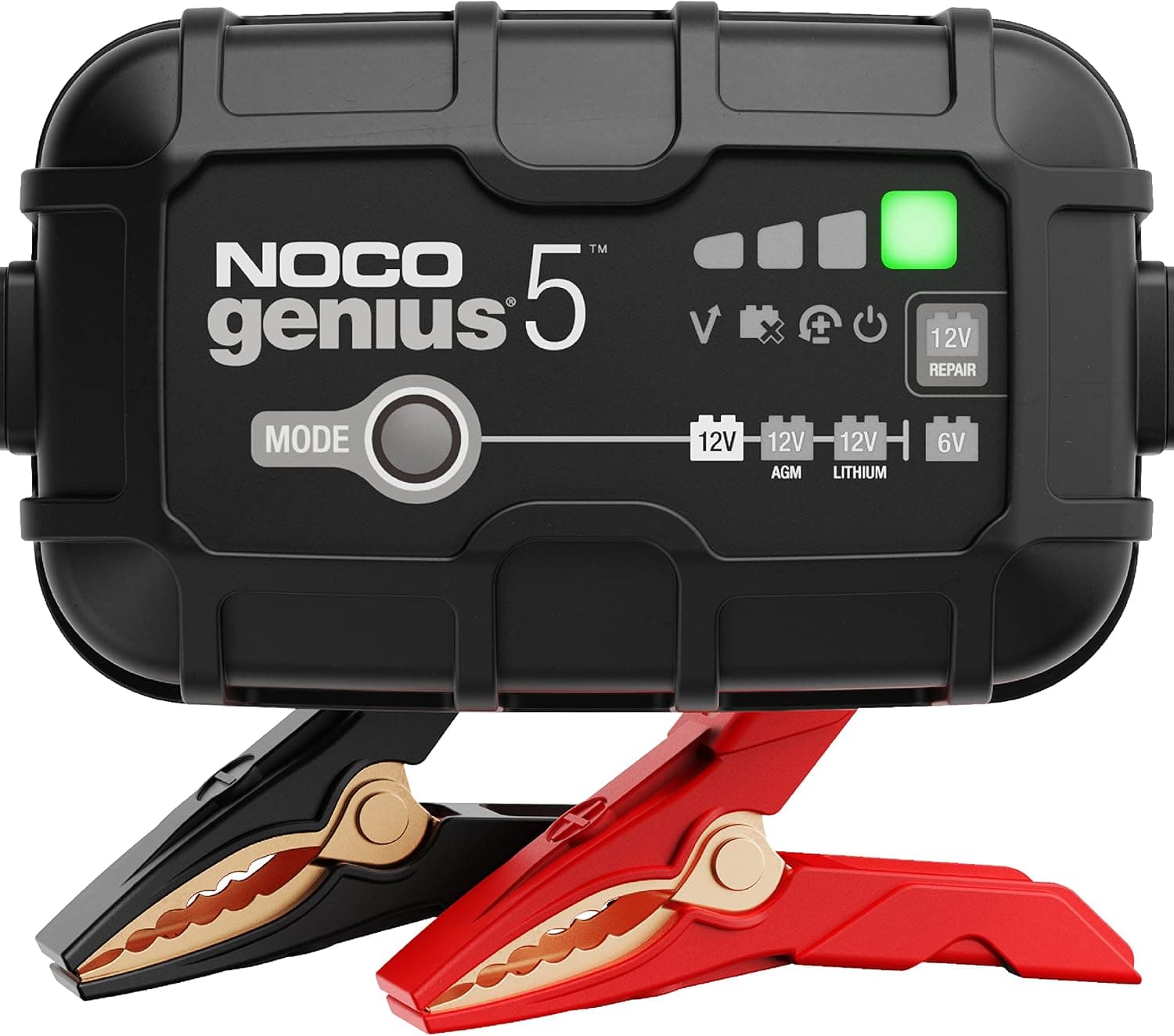
NOCO GENIUS5, 5A 6V/12V
The listing states a 5 A charger covering both 6 V and 12 V, with overcharge protection, temperature compensation, a desulfation mode, and support for lead-acid and LiFePO4. Five amps is the rate that both maintains a battery indefinitely and recovers a flat one in a reasonable span, which is why it is the one to reach for if you are buying a single charger. Temperature compensation is the feature that makes it safe to leave connected through a season.
- Stated rate
- 5 A
- Stated voltages
- 6 V and 12 V
- Stated chemistries
- Lead-acid, LiFePO4
- Stated modes
- Desulfator, force mode
- Stated protection
- Overcharge protection, temperature compensation
What it does well
- A stated 5 A rate both maintains and recovers, so one unit covers the whole job.
- The listing states support for both lead-acid and LiFePO4, which covers most of what a household owns.
- Stated temperature compensation adjusts the charge for ambient conditions over a long connection.
- Both 6 V and 12 V are stated, so older equipment is not excluded.
Where it falls short
- Five amps is slower than a dedicated recovery charger on a deeply discharged car battery.
- The stated force mode needs the manual read before use, since it bypasses a protection the charger otherwise applies.
- More capability than a single motorcycle battery needs, at a size to match.
Best forThe one charger in the garage, covering a car, a mower, and a motorcycle without buying three units.
Gentlest stated rate among wall chargers, 750 mA
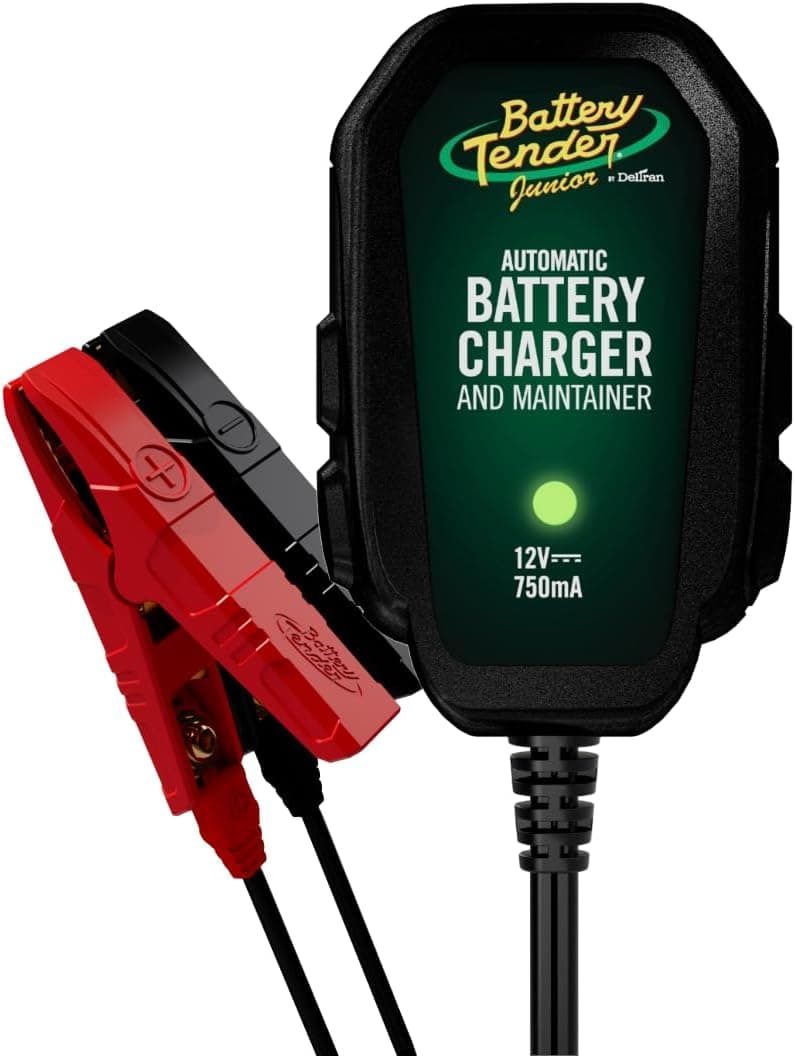
Battery Tender Junior, 12V 750 mA
The listing describes an automatic maintainer at 750 mA for 12 V motorcycle and ATV batteries. This is the lowest stated rate among the wall-powered chargers here, which is exactly right for its job: holding a small battery at full through a winter without pushing energy at it after it is done. It is a maintainer rather than a charger, and the distinction is the point.
- Stated rate
- 750 mA
- Stated voltage
- 12 V
- Stated role
- Automatic maintainer
- Stated use
- Motorcycles and ATVs
- Stated chemistries
- Not stated on the listing
What it does well
- A stated 750 mA rate is the gentlest among the wall-powered chargers here, which suits small batteries left connected for months.
- Automatic operation means it steps down rather than charging indefinitely.
- Long-established product, so ring terminal leads and accessories are easy to source.
- Small and light enough to leave mounted near where the vehicle is stored.
Where it falls short
- At 750 mA, recovering a deeply discharged battery takes days rather than hours.
- The listing states 12 V only, so 6 V equipment is not covered.
- A maintainer sized for motorcycles is undersized as a general garage charger.
Best forA motorcycle, an ATV, or a mower that sits from autumn to spring and needs to start on the first attempt.
Full stated protection set at a 1 A rate
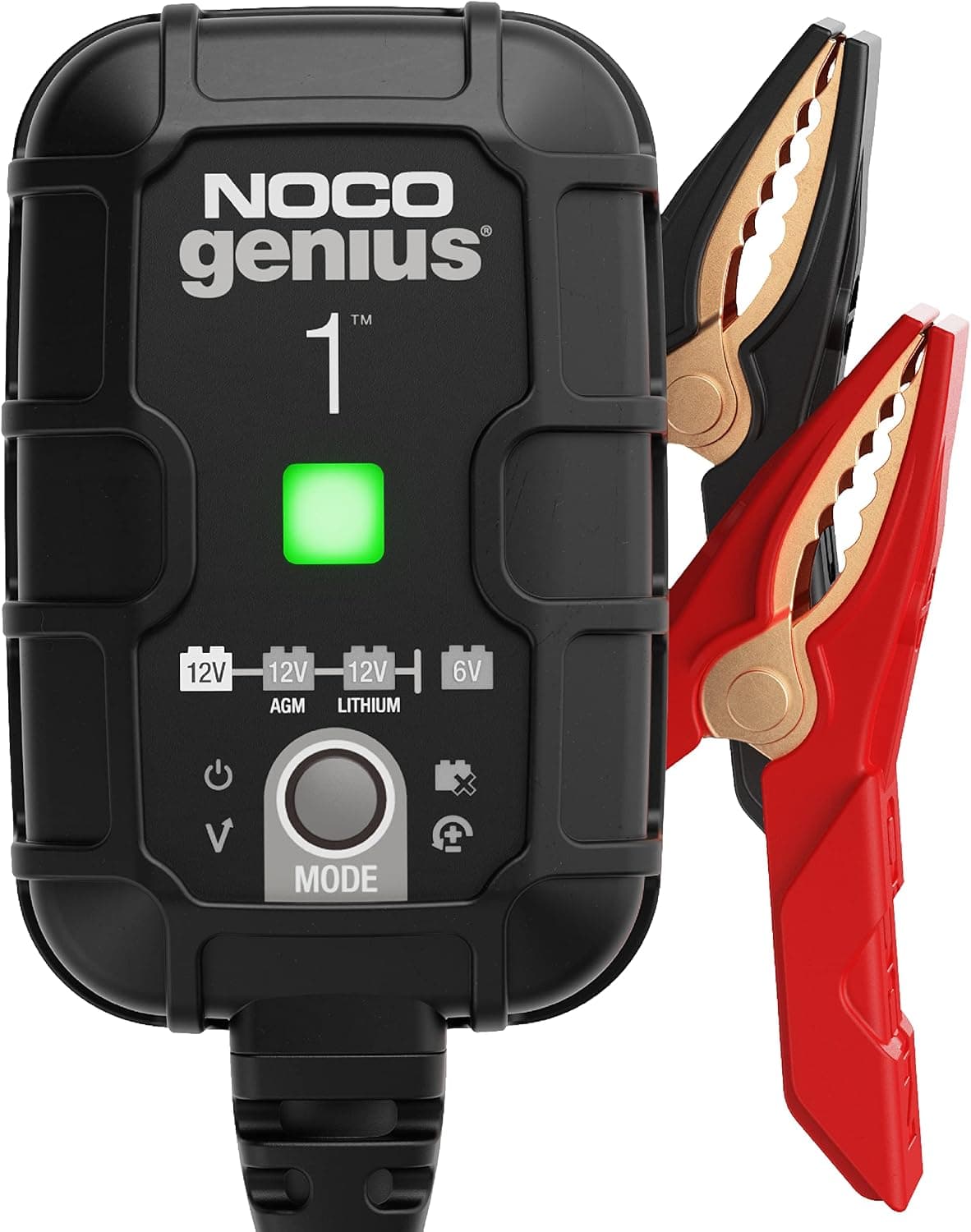
NOCO GENIUS1, 1A 6V/12V
The listing states a 1 A charger covering 6 V and 12 V with the same feature set as the larger units in this line: overcharge protection, temperature compensation, desulfation, and support for lead-acid and LiFePO4. One amp is a maintenance rate, so this is the unit to leave connected rather than the one to reach for when something is flat. The full protection set at the smallest size is the reason it is here.
- Stated rate
- 1 A
- Stated voltages
- 6 V and 12 V
- Stated chemistries
- Lead-acid, LiFePO4
- Stated modes
- Desulfator, force mode
- Stated protection
- Overcharge protection, temperature compensation
What it does well
- A stated 1 A rate suits small batteries and long unattended connections.
- The listing states the same protection set as the larger units in this line, at the smallest size.
- Both 6 V and 12 V are stated, so older and smaller equipment is covered.
- The listing states support for both lead-acid and LiFePO4.
Where it falls short
- One amp will not recover a flat car battery in any useful timeframe.
- The stated force mode needs the manual read before it is used.
- Buying this alongside a larger charger means owning two units where a mid-size one would have done.
Best forA battery that sits for months and needs holding rather than filling, on either a 6 V or 12 V system.
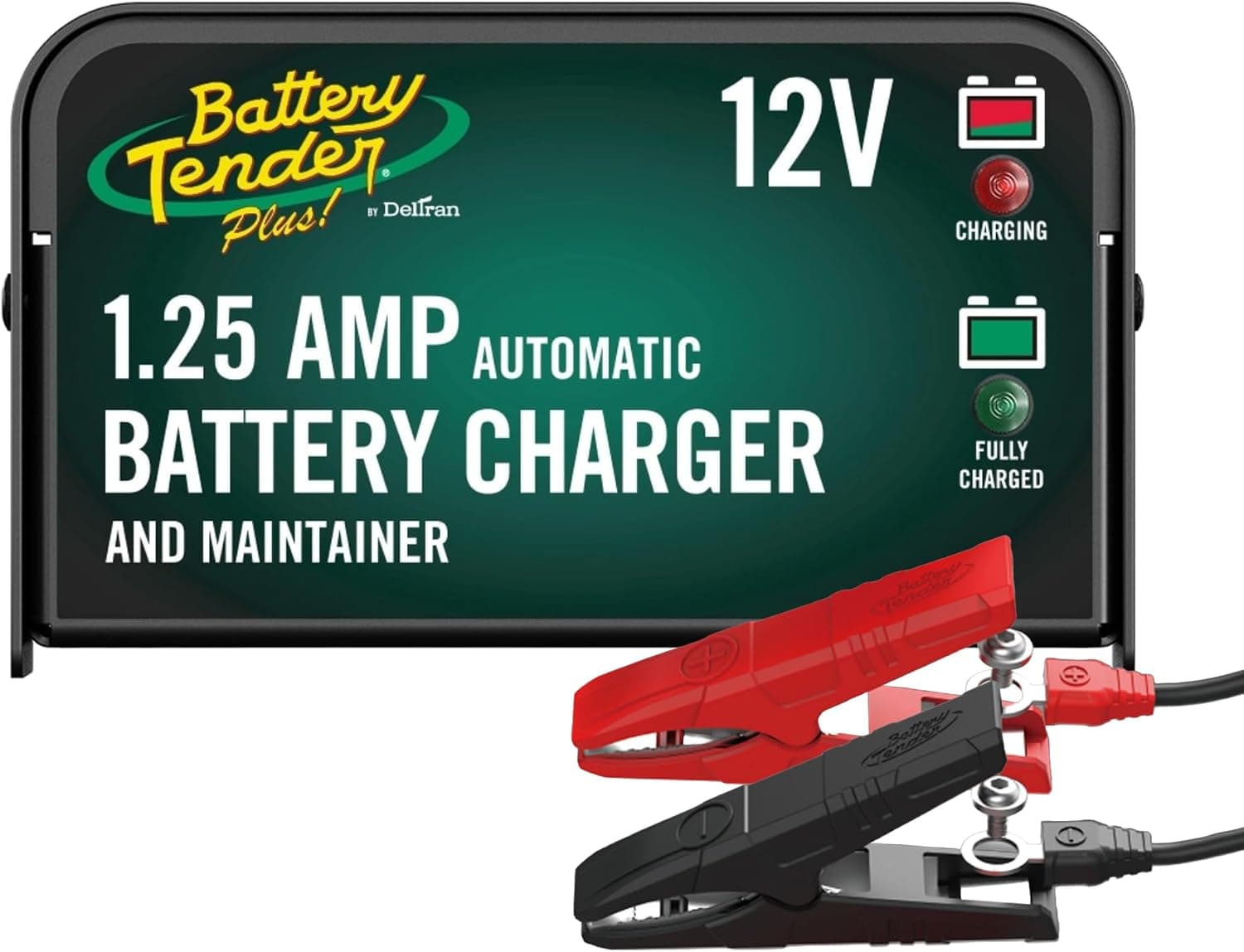
Battery Tender Plus, 12V 1.25A
The listing describes a 1.25 A float charge maintainer for 12 V cars, motorcycles, and ATVs. Float charging is the behavior that lets a unit stay connected for a season without cooking the battery it is holding. The extra half amp over the smaller unit in this line is what brings a car battery into range.
- Stated rate
- 1.25 A
- Stated voltage
- 12 V
- Stated role
- Float charge maintainer
- Stated use
- Cars, motorcycles, ATVs
- Stated chemistries
- Not stated on the listing
What it does well
- A stated 1.25 A rate covers car batteries as well as motorcycle ones.
- Float charging is stated, which is the behavior needed for a season-long connection.
- Long-established design with widely available ring terminal leads.
- One unit covering cars, motorcycles, and ATVs simplifies a garage with several vehicles.
Where it falls short
- The listing states 12 V only, so 6 V equipment is excluded.
- The listing does not state a desulfation mode or temperature compensation.
- At 1.25 A, recovering a deeply discharged car battery is measured in days.
Best forA garage with a car and a motorcycle that both sit, where one maintainer should cover both.
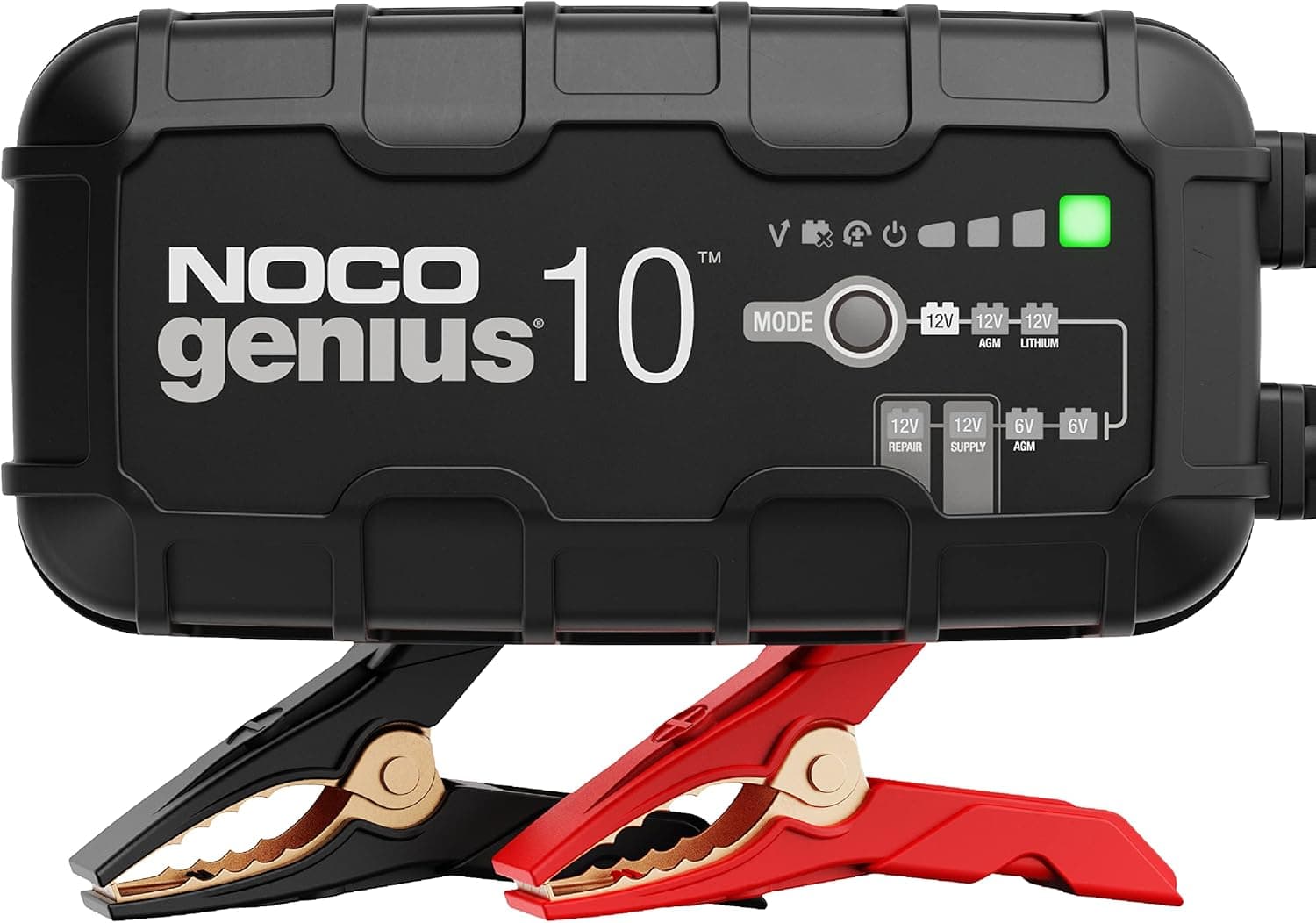
NOCO GENIUS10, 10A 6V/12V
The listing states a 10 A charger covering 6 V and 12 V with overcharge protection, temperature compensation, desulfation, and support for lead-acid and LiFePO4. Ten amps is a recovery rate: this is the unit for a battery that is already flat and needs to be usable today. It maintains as well, but that is not the reason to buy the largest one in the line.
- Stated rate
- 10 A
- Stated voltages
- 6 V and 12 V
- Stated chemistries
- Lead-acid, LiFePO4
- Stated modes
- Desulfator, force mode
- Stated protection
- Overcharge protection, temperature compensation
What it does well
- The stated 10 A rate is the fastest in this category and the only one sized for real recovery work.
- The listing states the same protection set as the smaller units in this line.
- Both 6 V and 12 V are stated, alongside lead-acid and LiFePO4 support.
- Handles larger batteries, including deep-cycle types, that the smaller units would take days on.
Where it falls short
- Ten amps is far more than a motorcycle or ATV battery needs for maintenance.
- The largest and most expensive unit in a line where most households only need maintenance.
- The stated force mode requires reading the manual, since it bypasses a normal protection.
Best forA household with larger or deep-cycle batteries, or one that regularly needs a flat battery usable the same day.
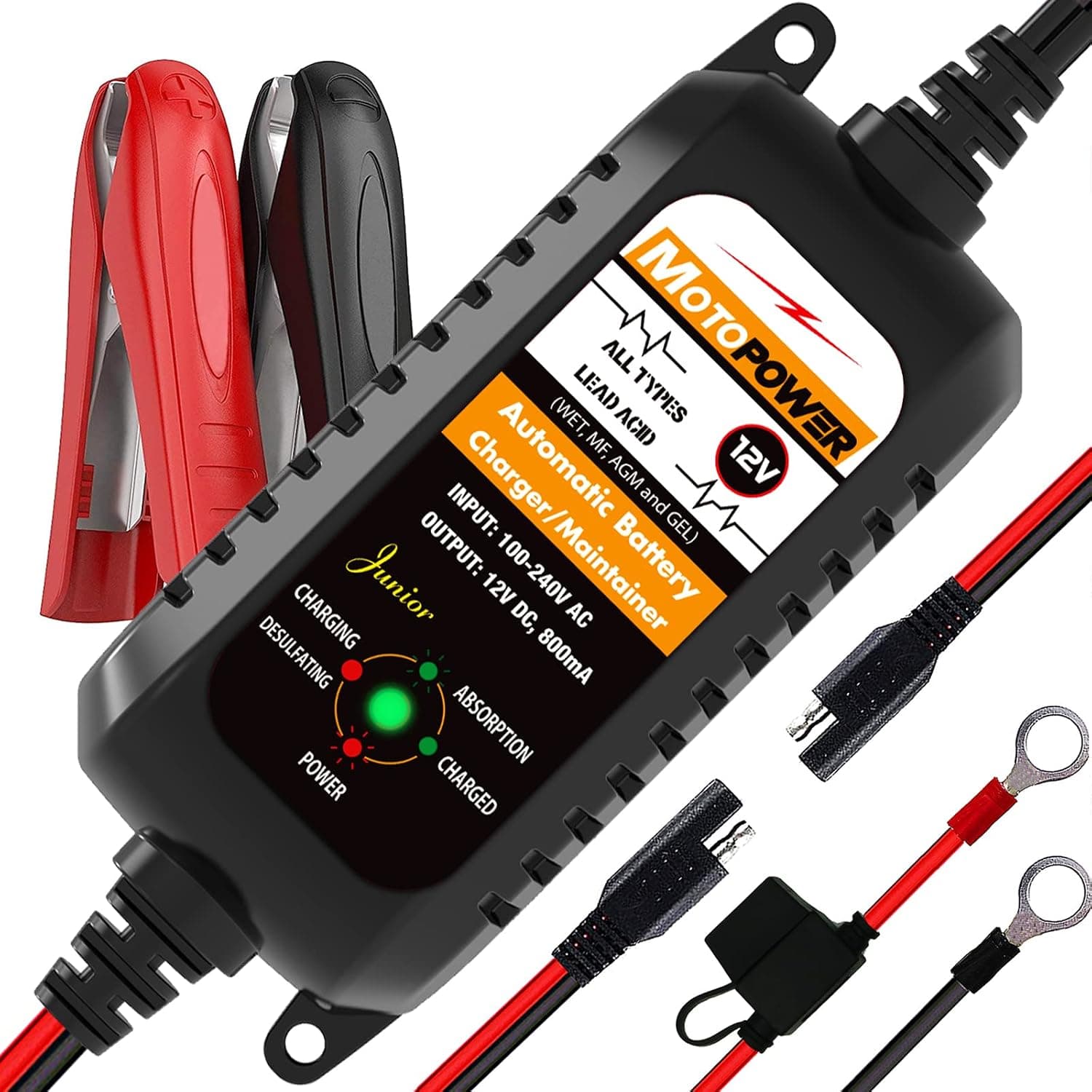
MOTOPOWER MP00205A, 12V 800 mA
The listing describes an automatic 12 V unit at 800 mA that acts as charger, maintainer, trickle charger, and desulfator. It is the least expensive route to leaving a stored battery connected through a season, with a desulfation mode that the other low-rate units here do not state. Treat the desulfation claim as a stated feature rather than a promised recovery.
- Stated rate
- 800 mA
- Stated voltage
- 12 V
- Stated role
- Charger, maintainer, trickle
- Stated modes
- Desulfator
- Stated chemistries
- Not stated on the listing
What it does well
- A stated desulfation mode at a maintenance rate, which the other sub-1 A units here do not state.
- Automatic operation intended for long unattended connections.
- A stated 800 mA rate suits small and mid-size 12 V batteries left in storage.
- Compact enough to leave permanently near a stored vehicle.
Where it falls short
- The listing states 12 V only, so 6 V equipment is not covered.
- At 800 mA it will not recover a flat car battery in a useful timeframe.
- The listing does not state which chemistries are supported.
Best forA stored 12 V battery on a budget, where the unit is expected to stay connected for months.
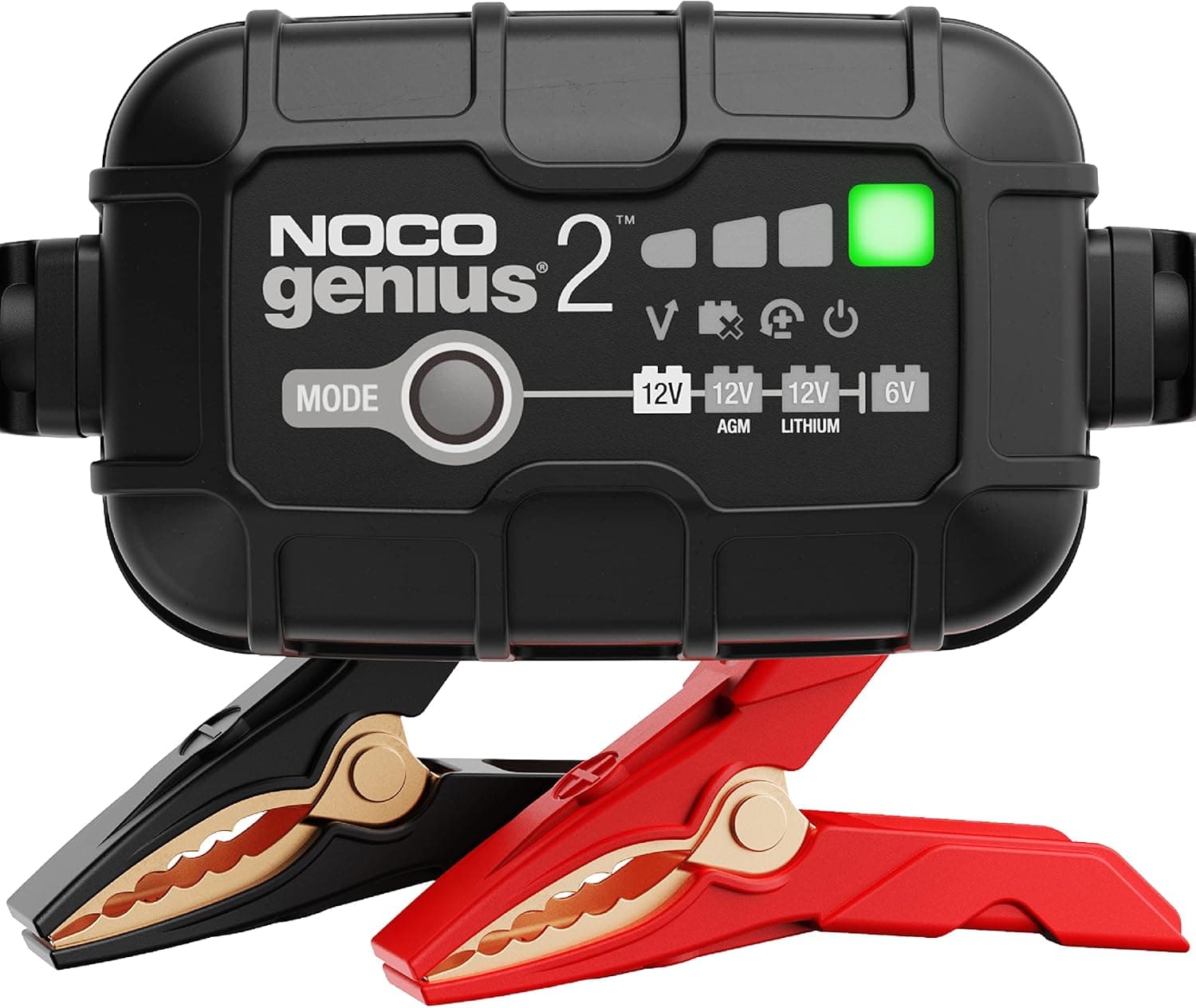
NOCO GENIUS2, 2A 6V/12V
The listing states a 2 A charger covering 6 V and 12 V, with the same feature set as the rest of this line: overcharge protection, temperature compensation, a desulfation mode, a force mode, and support for lead-acid and LiFePO4. Two amps sits between the 1 A maintainer and the 5 A all-rounder, which makes it the sensible middle for a motorcycle, a mower, or a car that only needs topping up rather than rescuing.
- Stated rate
- 2 A
- Stated voltages
- 6 V and 12 V
- Stated chemistries
- Lead-acid, LiFePO4
- Stated modes
- Desulfator, force mode
- Stated protection
- Overcharge protection, temperature compensation
What it does well
- A stated 2 A rate maintains comfortably and recovers a modestly run-down battery in a day rather than several.
- The listing states both lead-acid and LiFePO4 support, so one unit covers a mixed garage.
- Stated temperature compensation is the feature that makes a long unattended connection reasonable.
- Both 6 V and 12 V are stated, so older or smaller equipment is not left out.
Where it falls short
- Two amps is still slow on a deeply discharged car battery, where the 5 A and 10 A units in this line are the better fit.
- The stated force mode bypasses a protection the charger otherwise applies, so the manual has to be read before using it.
- More than a single motorcycle battery needs, where the 1 A unit does the same job at a smaller size.
Best forA household with a motorcycle or mower plus one car, wanting a single charger that can do a little of both jobs.
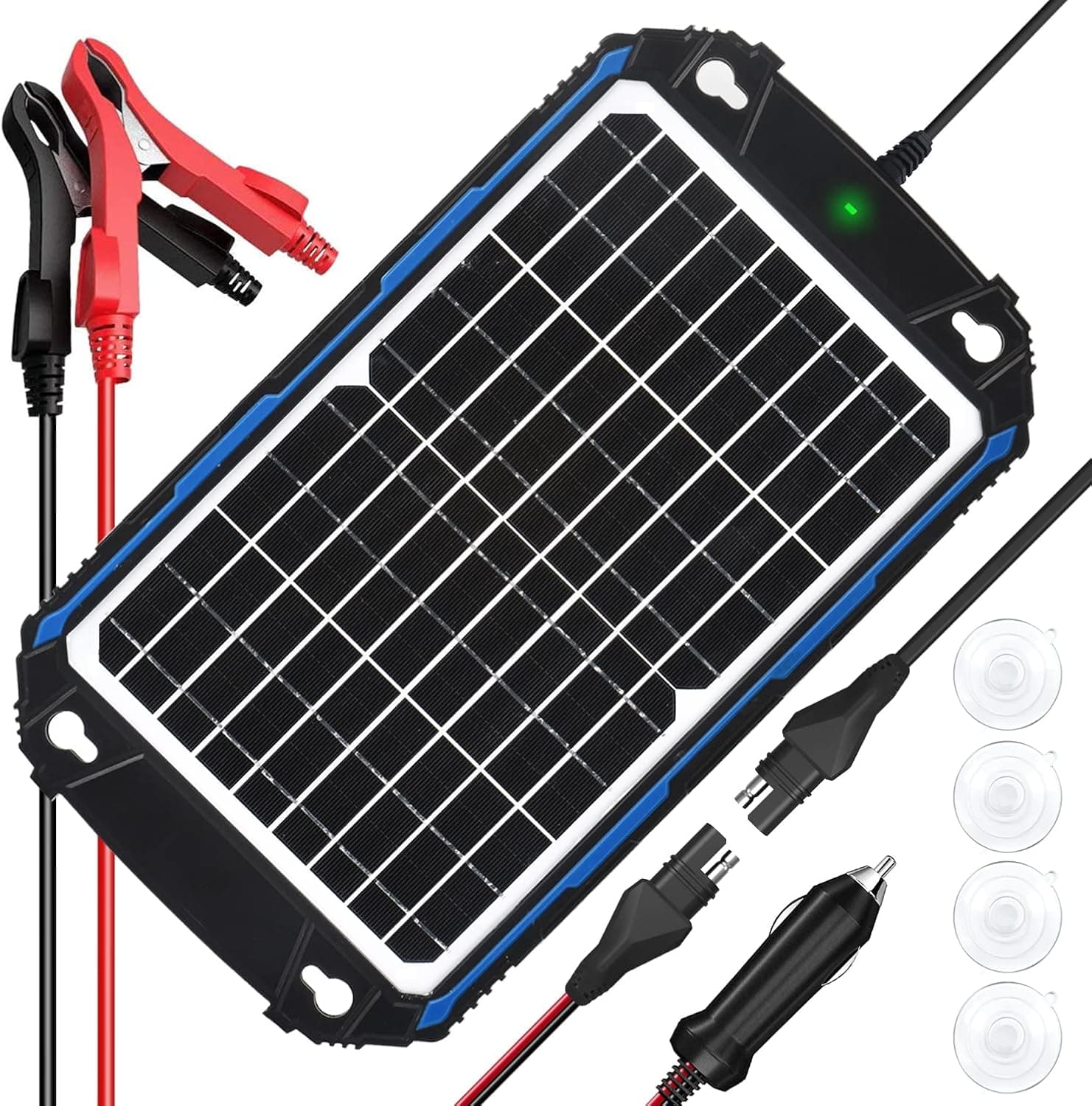
SUNER POWER Solar Maintainer, 12 W 12V
The listing states a 12 W, 12 V solar panel with a built-in MPPT charge controller and a waterproof build, meant to hold a vehicle, boat, RV, or trailer battery at full without a wall outlet. That is the case for a solar maintainer: the vehicle that sits where there is no receptacle. The controller is the part that matters, since a bare panel with no regulation is how a small battery gets overcharged in summer.
- Stated panel output
- 12 W
- Stated voltage
- 12 V
- Stated controller
- Built-in MPPT charge controller
- Stated build
- Waterproof
- Stated charging rate
- Not stated on the listing
What it does well
- The listing states a built-in MPPT charge controller, so the panel is regulated rather than pushing raw current at the battery.
- No wall outlet needed, which is the whole point for a boat, a trailer, or a car parked on the street.
- A stated 12 W panel is the largest stated solar wattage in this catalog, which helps on short winter days.
- A stated waterproof build suits being left outdoors on a dash or a deck for a season.
Where it falls short
- Output depends entirely on sun; the listing states a panel wattage, not a charging rate, and shade or winter cuts it sharply.
- The listing states 12 V only, so 6 V equipment is not covered.
- A maintainer rather than a charger: it will not recover a flat battery in any useful span.
Best forA boat, RV, or second vehicle that sits for weeks where there is sun and no outlet.
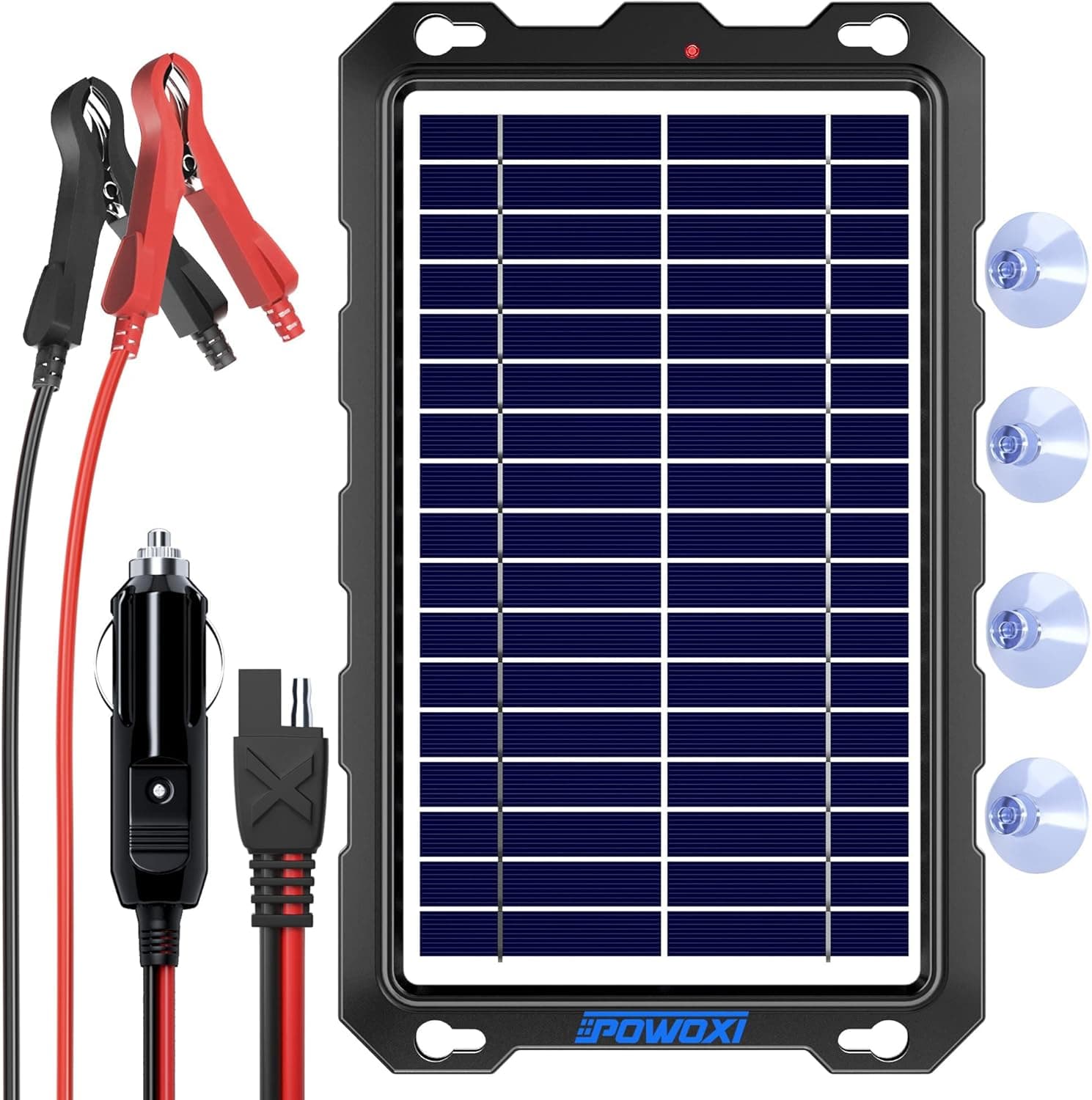
POWOXI Solar Maintainer, 7.5 W 12V
The listing states a 7.5 W, 12 V solar trickle maintainer with a smart charge controller and safety protections, in a waterproof build for cars, boats, RVs, and motorcycles. It is the smaller of the two vehicle solar maintainers here, sized for holding a healthy battery rather than making up for a real drain. Regulation is stated, which is the feature that separates a maintainer from a panel.
- Stated panel output
- 7.5 W
- Stated voltage
- 12 V
- Stated controller
- Smart charge controller with safety protections
- Stated build
- Waterproof
- Stated charging rate
- Not stated on the listing
What it does well
- The listing states a charge controller with safety protections, so it is not a bare panel wired to a battery.
- Works where there is no outlet, which is the reason to choose solar over a wall maintainer at all.
- A stated 7.5 W panel is modest enough to suit a motorcycle or small battery without over-driving it.
- A stated waterproof build allows it to stay on a dash or deck through a season.
Where it falls short
- The listing states a panel wattage and not a charging rate, and real output falls with shade, dirt, and short days.
- A stated 7.5 W is less headroom than the 12 W solar unit here, so a vehicle with a parasitic draw may still lose ground.
- The listing states 12 V only, and it will not recover a flat battery.
Best forA motorcycle, mower, or small car battery parked in the sun with nowhere to plug in.
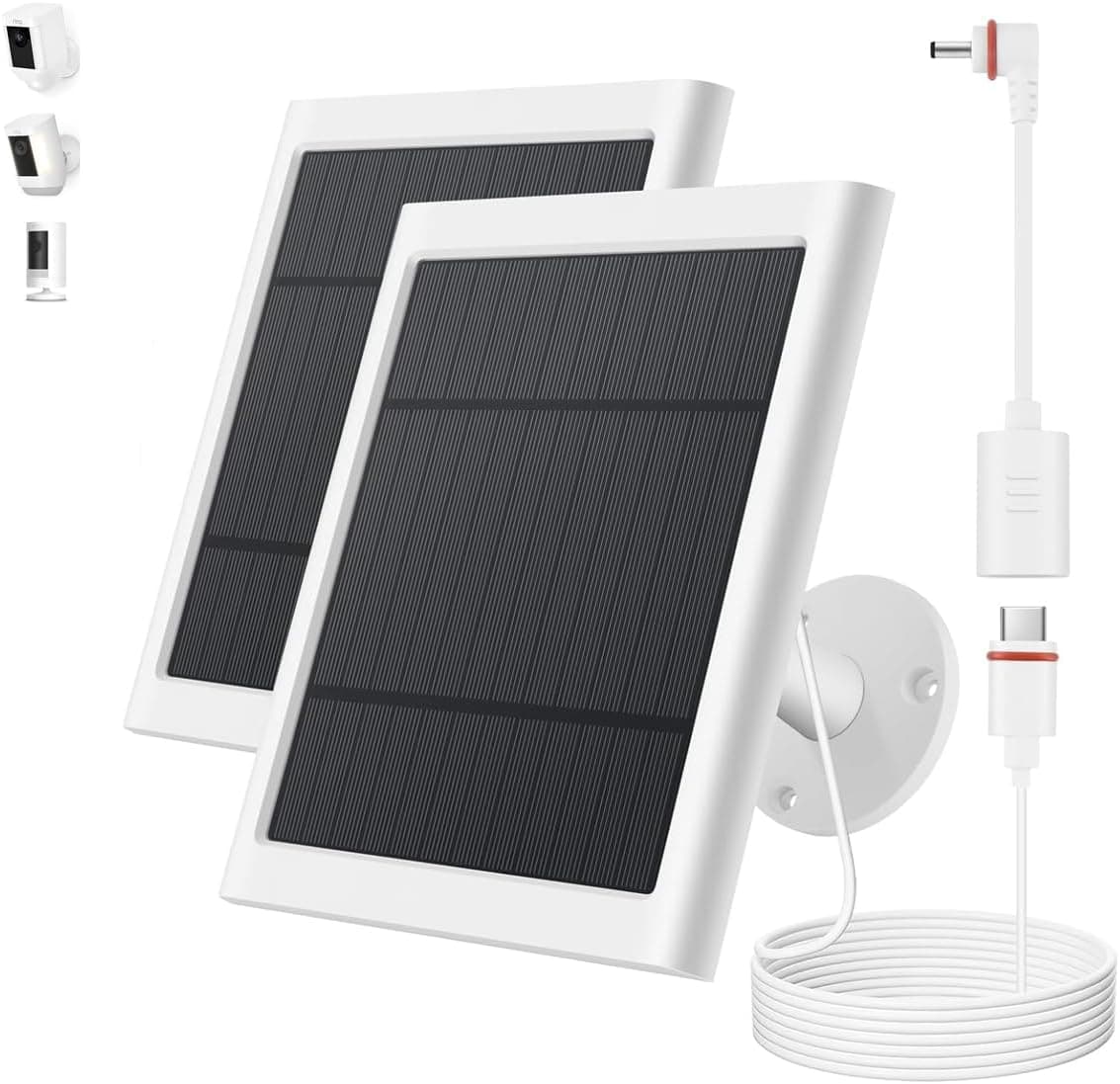
Solar Charger for Ring Cameras, 4 W, 2-pack
The listing states a pair of 4 W solar panels with 10 ft cables and a USB-C to barrel adapter, made to keep the batteries in Ring Stick Up and Spotlight cameras and the Reolink Argus Pro topped up. It is the odd one out in this category: not a vehicle maintainer but a maintainer all the same, for the one battery a household forgets exists until the camera goes offline. Two panels covers two cameras.
- Stated panel output
- 4 W each
- Quantity
- 2-pack
- Stated cable
- 10 ft
- Stated connector
- USB-C to barrel plug adapter
- Stated compatibility
- Ring Stick Up Cam Battery/Pro, Spotlight Cam Battery/Plus/Pro, Reolink Argus Pro
What it does well
- Two stated panels means two cameras stay charged without a ladder every few weeks.
- A stated 10 ft cable gives room to put the panel in sun while the camera stays where it needs to be.
- The listing names the specific camera models it fits, which removes the guesswork on the connector.
- A stated USB-C to barrel adapter covers both connector styles the named cameras use.
Where it falls short
- For camera batteries only; the listing states nothing about vehicle or 12 V batteries, and this site does not suggest it for them.
- A stated 4 W per panel depends entirely on placement, and a shaded or north-facing wall will not keep up.
- The listing title does not say whether the panels are weatherproof, so check the full page before mounting them outdoors.
Best forA home with battery security cameras that keep going offline, where climbing up to recharge them is the chore to remove.
| Product | Rate, as listed | Voltage | Best-suited role | Stated features |
|---|---|---|---|---|
| NOCO GENIUS5, 5A 6V/12V | 5 A | 6 V and 12 V | Maintain and recover | Desulfator, temperature compensation, force mode |
| Battery Tender Junior, 12V 750 mA | 750 mA | 12 V | Maintain only | Automatic maintainer |
| NOCO GENIUS1, 1A 6V/12V | 1 A | 6 V and 12 V | Maintain only | Desulfator, temperature compensation, force mode |
| Battery Tender Plus, 12V 1.25A | 1.25 A | 12 V | Maintain only | Float charge maintainer |
| NOCO GENIUS10, 10A 6V/12V | 10 A | 6 V and 12 V | Recover, then maintain | Desulfator, temperature compensation, force mode |
| MOTOPOWER MP00205A, 12V 800 mA | 800 mA | 12 V | Maintain and trickle | Automatic, trickle, desulfator |
| NOCO GENIUS2, 2A 6V/12V | 2 A | 6 V and 12 V | Maintain, light recovery | Desulfator, temperature compensation, force mode |
| SUNER POWER Solar Maintainer, 12 W 12V | 12 W solar panel | 12 V | Maintain, no outlet | MPPT controller, waterproof |
| POWOXI Solar Maintainer, 7.5 W 12V | 7.5 W solar panel | 12 V | Maintain small batteries, no outlet | Charge controller, waterproof |
| Solar Charger for Ring Cameras, 4 W, 2-pack | 4 W solar panel, two | Camera battery, USB-C/barrel | Keep security cameras charged | 10 ft cable, adapter included |
Battery Chargers & Maintainers, as the listings state
NOCO GENIUS5, 5A 6V/12V
- Rate, as listed
- 5 A
- Voltage
- 6 V and 12 V
- Best-suited role
- Maintain and recover
- Stated features
- Desulfator, temperature compensation, force mode
Battery Tender Junior, 12V 750 mA
- Rate, as listed
- 750 mA
- Voltage
- 12 V
- Best-suited role
- Maintain only
- Stated features
- Automatic maintainer
NOCO GENIUS1, 1A 6V/12V
- Rate, as listed
- 1 A
- Voltage
- 6 V and 12 V
- Best-suited role
- Maintain only
- Stated features
- Desulfator, temperature compensation, force mode
Battery Tender Plus, 12V 1.25A
- Rate, as listed
- 1.25 A
- Voltage
- 12 V
- Best-suited role
- Maintain only
- Stated features
- Float charge maintainer
NOCO GENIUS10, 10A 6V/12V
- Rate, as listed
- 10 A
- Voltage
- 6 V and 12 V
- Best-suited role
- Recover, then maintain
- Stated features
- Desulfator, temperature compensation, force mode
MOTOPOWER MP00205A, 12V 800 mA
- Rate, as listed
- 800 mA
- Voltage
- 12 V
- Best-suited role
- Maintain and trickle
- Stated features
- Automatic, trickle, desulfator
NOCO GENIUS2, 2A 6V/12V
- Rate, as listed
- 2 A
- Voltage
- 6 V and 12 V
- Best-suited role
- Maintain, light recovery
- Stated features
- Desulfator, temperature compensation, force mode
SUNER POWER Solar Maintainer, 12 W 12V
- Rate, as listed
- 12 W solar panel
- Voltage
- 12 V
- Best-suited role
- Maintain, no outlet
- Stated features
- MPPT controller, waterproof
POWOXI Solar Maintainer, 7.5 W 12V
- Rate, as listed
- 7.5 W solar panel
- Voltage
- 12 V
- Best-suited role
- Maintain small batteries, no outlet
- Stated features
- Charge controller, waterproof
Solar Charger for Ring Cameras, 4 W, 2-pack
- Rate, as listed
- 4 W solar panel, two
- Voltage
- Camera battery, USB-C/barrel
- Best-suited role
- Keep security cameras charged
- Stated features
- 10 ft cable, adapter included
Everything in this category, side by side
Values in this table come from each listing rather than from any measurement made here.
| Product | Rate, as listed | Voltage | Best-suited role | Stated features |
|---|---|---|---|---|
| NOCO GENIUS5, 5A 6V/12V | 5 A | 6 V and 12 V | Maintain and recover | Desulfator, temperature compensation, force mode |
| Battery Tender Junior, 12V 750 mA | 750 mA | 12 V | Maintain only | Automatic maintainer |
| NOCO GENIUS1, 1A 6V/12V | 1 A | 6 V and 12 V | Maintain only | Desulfator, temperature compensation, force mode |
| Battery Tender Plus, 12V 1.25A | 1.25 A | 12 V | Maintain only | Float charge maintainer |
| NOCO GENIUS10, 10A 6V/12V | 10 A | 6 V and 12 V | Recover, then maintain | Desulfator, temperature compensation, force mode |
| MOTOPOWER MP00205A, 12V 800 mA | 800 mA | 12 V | Maintain and trickle | Automatic, trickle, desulfator |
| NOCO GENIUS2, 2A 6V/12V | 2 A | 6 V and 12 V | Maintain, light recovery | Desulfator, temperature compensation, force mode |
| SUNER POWER Solar Maintainer, 12 W 12V | 12 W solar panel | 12 V | Maintain, no outlet | MPPT controller, waterproof |
| POWOXI Solar Maintainer, 7.5 W 12V | 7.5 W solar panel | 12 V | Maintain small batteries, no outlet | Charge controller, waterproof |
| Solar Charger for Ring Cameras, 4 W, 2-pack | 4 W solar panel, two | Camera battery, USB-C/barrel | Keep security cameras charged | 10 ft cable, adapter included |
Battery Chargers & Maintainers, all products
NOCO GENIUS5, 5A 6V/12V
- Rate, as listed
- 5 A
- Voltage
- 6 V and 12 V
- Best-suited role
- Maintain and recover
- Stated features
- Desulfator, temperature compensation, force mode
Battery Tender Junior, 12V 750 mA
- Rate, as listed
- 750 mA
- Voltage
- 12 V
- Best-suited role
- Maintain only
- Stated features
- Automatic maintainer
NOCO GENIUS1, 1A 6V/12V
- Rate, as listed
- 1 A
- Voltage
- 6 V and 12 V
- Best-suited role
- Maintain only
- Stated features
- Desulfator, temperature compensation, force mode
Battery Tender Plus, 12V 1.25A
- Rate, as listed
- 1.25 A
- Voltage
- 12 V
- Best-suited role
- Maintain only
- Stated features
- Float charge maintainer
NOCO GENIUS10, 10A 6V/12V
- Rate, as listed
- 10 A
- Voltage
- 6 V and 12 V
- Best-suited role
- Recover, then maintain
- Stated features
- Desulfator, temperature compensation, force mode
MOTOPOWER MP00205A, 12V 800 mA
- Rate, as listed
- 800 mA
- Voltage
- 12 V
- Best-suited role
- Maintain and trickle
- Stated features
- Automatic, trickle, desulfator
NOCO GENIUS2, 2A 6V/12V
- Rate, as listed
- 2 A
- Voltage
- 6 V and 12 V
- Best-suited role
- Maintain, light recovery
- Stated features
- Desulfator, temperature compensation, force mode
SUNER POWER Solar Maintainer, 12 W 12V
- Rate, as listed
- 12 W solar panel
- Voltage
- 12 V
- Best-suited role
- Maintain, no outlet
- Stated features
- MPPT controller, waterproof
POWOXI Solar Maintainer, 7.5 W 12V
- Rate, as listed
- 7.5 W solar panel
- Voltage
- 12 V
- Best-suited role
- Maintain small batteries, no outlet
- Stated features
- Charge controller, waterproof
Solar Charger for Ring Cameras, 4 W, 2-pack
- Rate, as listed
- 4 W solar panel, two
- Voltage
- Camera battery, USB-C/barrel
- Best-suited role
- Keep security cameras charged
- Stated features
- 10 ft cable, adapter included
Care and safety
These are the one item in this catalog designed to be left connected and unattended for long stretches, which raises the bar on where you put them and what you connect them to.
- Read the manual for your charger and the manual for the battery. Connection order and mode selection differ between units.
- Charge in a ventilated space. Lead-acid batteries can vent hydrogen while charging.
- Keep the charger dry and off the ground, away from anything that burns.
- Match the mode to the chemistry before connecting. Selecting a lithium mode for a lead-acid battery, or the reverse, is the error these units are trying to prevent.
- Inspect the leads for cracked insulation before each season.
Hard limits
- Do not charge a battery that is cracked, leaking, visibly swollen, or frozen.
- No smoking, flames, or sparks near a charging lead-acid battery.
- Do not use a maintainer on a chemistry the listing does not name, and do not use a force or recovery mode without reading what your manual says it does.
- Do not attempt to open, repair, or refill a sealed battery, and do not follow procedures that involve forcing current into a battery a charger has refused.
- Do not connect a charger to any part of house wiring. It plugs into a wall outlet and connects to a battery, and that is the whole of it.
Where this sits in the sequence
Stages
Devices
No device page is tied to this category. Nothing here powers a household load directly; it keeps a vehicle battery alive so that it starts.
Questions this category keeps getting
What is the difference between a charger and a maintainer?
A charger puts a meaningful amount of energy back into a battery over hours. A maintainer supplies a small trickle intended to hold a full battery at full, and it is meant to stay connected for weeks. Several units in this category do both and step between modes automatically.
Can I leave a maintainer connected all winter?
That is what an automatic float maintainer is designed for, and the manual for your unit will say so explicitly if it applies. The requirements are a dry, ventilated location, a unit that steps down to float rather than charging indefinitely, and leads in good condition.
What does a desulfator mode do?
Several listings in this category state a desulfation mode, described as an attempt to recover a lead-acid battery that has been left discharged. Treat it as a feature the manufacturer states rather than a guaranteed recovery, and read what your manual says the mode actually does before selecting it.
Will one charger work for my car, my mower, and my motorcycle?
Often yes, if it covers both 6 V and 12 V and names the chemistries you own. The remaining question is rate: a unit sized for a car battery is more than a small motorcycle battery needs, and several manufacturers sell the same design at different amperages for exactly that reason.
How is this related to backup power?
Indirectly, and that is why it sits late in the sequence. Every battery that stays healthy is one fewer thing that fails during the week you have other problems, and the vehicle battery is the one people discover at the worst possible time.